



Define who will receive a bowl
Start with the participating group and its actual attendance. A company with 120 employees might have 70 people on site, while only 50 initially want the fruit programme. Those are three different numbers. Ask the budget owner which group the order should serve and whether employees need to opt in. Record the service date alongside the count so an estimate made for a busy team day is not reused for a quieter day without review.
Identify whether visitors, reception staff, contract workers or meeting attendees are included. Make the allocation rule clear before packing starts. A simple count by floor or team is often enough; there is usually no need to give the supplier a list of every employee's personal details. Agree who can approve the final count and when changes must be confirmed. The objective is a reliable number of servings, not an unnecessarily complex registration system.
Specify the portion, not just the container
A bowl size describes a container, while a serving weight describes the prepared fruit inside it. Two similarly sized containers may hold different weights or fruit mixes. Ask for the agreed prepared net weight, assortment basis and whether ingredients are mixed or separated. If the office has a preferred presentation, share a reference photograph but translate the important details into a written specification.
For an illustrative requirement of 50 bowls at 180 grams of edible fruit each, the packing requirement is 9 kilograms of prepared fruit. This is not the weight of unpeeled fruit that must be purchased, nor is it a dietary recommendation. Peels, seeds and trimming affect preparation yield. A buyer ordering finished bowls should compare finished serving quantities rather than trying to price them against an unprepared crate without accounting for preparation and packing.
Build an assortment that fits the occasion
Explain whether the bowls are for a morning meeting, a regular afternoon break or a specific event. The service time helps plan delivery and receiving; it does not create a medical rule about when particular fruits should be eaten. Discuss employee preferences, the seasonal selection and any ingredients that must be excluded. Keep required exclusions separate from mild preferences so the team can review the brief accurately.
Ask what happens if a selected fruit is unsuitable or unavailable near the delivery date. An approved alternative list can keep the process manageable. For example, a buyer might accept another agreed melon variety while requiring approval before a specialty fruit is added. That example illustrates an approval process, not guaranteed stock. Record the authorised workplace contact and whether a substitution also changes the price, portion composition or packing arrangement.
Make receiving part of the order
Prepared fruit needs a practical receiving plan. Confirm a delivery window, a person who will accept the order and suitable storage before the bowls are distributed. Do not leave this to the receptionist to improvise when a delivery arrives. If security holds outside deliveries at a separate gate, include the time and process needed to move the order to the receiving point.
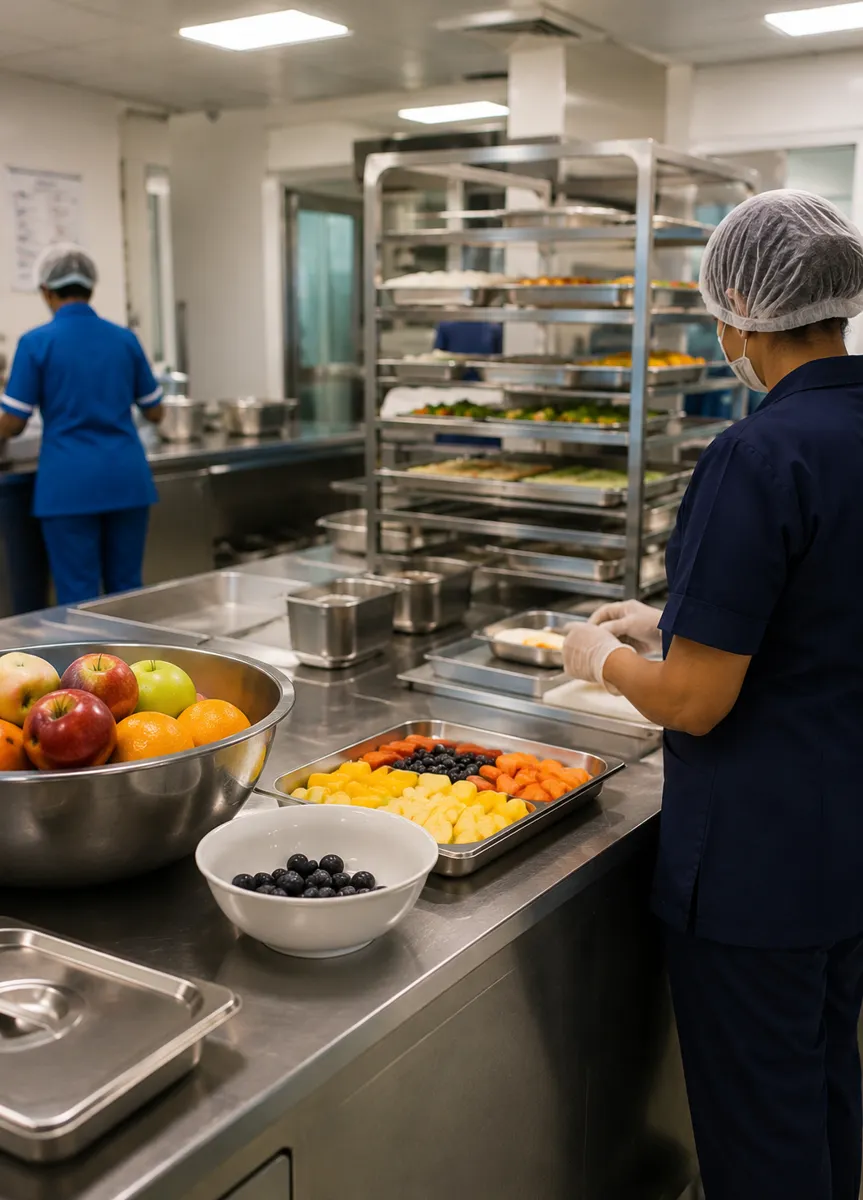
Reserve refrigerator space and follow the handling and consumption instructions supplied for the actual product. General guidance supports refrigerating cut fruit; it does not justify inventing a universal shelf life for every mixture and container. If the office cannot arrange suitable storage or prompt service, discuss a whole-fruit alternative before confirming prepared bowls. Packing fruit individually makes allocation easier, but it does not make a prepared product suitable for an entire unrefrigerated workday.
Agree packaging and distribution
Confirm the number of bowls per outer pack, lids, utensils, napkins and any labelling needed for receiving. If there are several floors, specify whether packing should separate allocations by floor. The office should be able to verify the count without opening every serving. Where employee names are unnecessary, a department or collection-point label can be simpler and reduce avoidable personal data sharing.
Decide whether staff collect a bowl at a pantry, receive it during a scheduled break or need a separately agreed distribution service. Delivery to the building is not automatically delivery to every desk. Check who will move the packs internally and who replaces an absent receiver. If a meeting room is used as a temporary collection point, make sure it is available and that the storage arrangement still follows the supplied instructions.
Compare quotations on the same basis
Send each quotation request the same count, portion basis, serving dates and address. Ask whether preparation, packing, delivery and requested extras are included. A cheaper price may reflect a smaller portion or a different fruit assortment rather than a better rate for the same service. Compare the written scope before deciding which offer fits the workplace.
Include your target budget as context and ask which choices affect the price most. You might review a simpler assortment, another portion basis or a different frequency, but each change should be reflected in a revised proposal. Confirm minimum quantities, payment terms, holiday treatment and any change or cancellation deadlines directly. A general guide or an enquiry form does not establish those commercial conditions on its own.
Run a small, observable first service
Treat the first delivery as an operational check. Record ordered bowls, accepted bowls and the number collected. Ask whether employees could find the collection point and whether the service time matched the break. Report any difference from the agreed specification using the order reference and a concise description. Follow product handling instructions when deciding what happens to an uncollected portion.
For example, if 50 bowls arrive and 12 remain uncollected, first check whether attendance changed or employees were unaware of the service. Reducing the next order may be sensible, but changing fruit varieties will not solve a hidden collection point. Share a short review with the FPS team, agree the next quantity and record the change. A clear first-service record makes a recurring desk fruit programme much easier to manage.
Prepare your enquiry checklist
Bring the decisions into one message: address and pin code, participating count by day, preferred portion weight, assortment method, exclusions, packing, receiving window and target budget. Identify provisional details and the date they will be confirmed. This lets the supplier distinguish a planning estimate from an approved order.
Fresh Produce Shoppe reviews individual cut-fruit requirements alongside wider workplace fruit supply. Availability, pricing, quantity thresholds and service scope are confirmed in the proposal. Use the desk subscriptions page to send the brief, or build a starting combination in the fruit planner. Keep the final written confirmation available to the person receiving the order, so the actual handover is checked against what the workplace approved.