


Start with the default choice
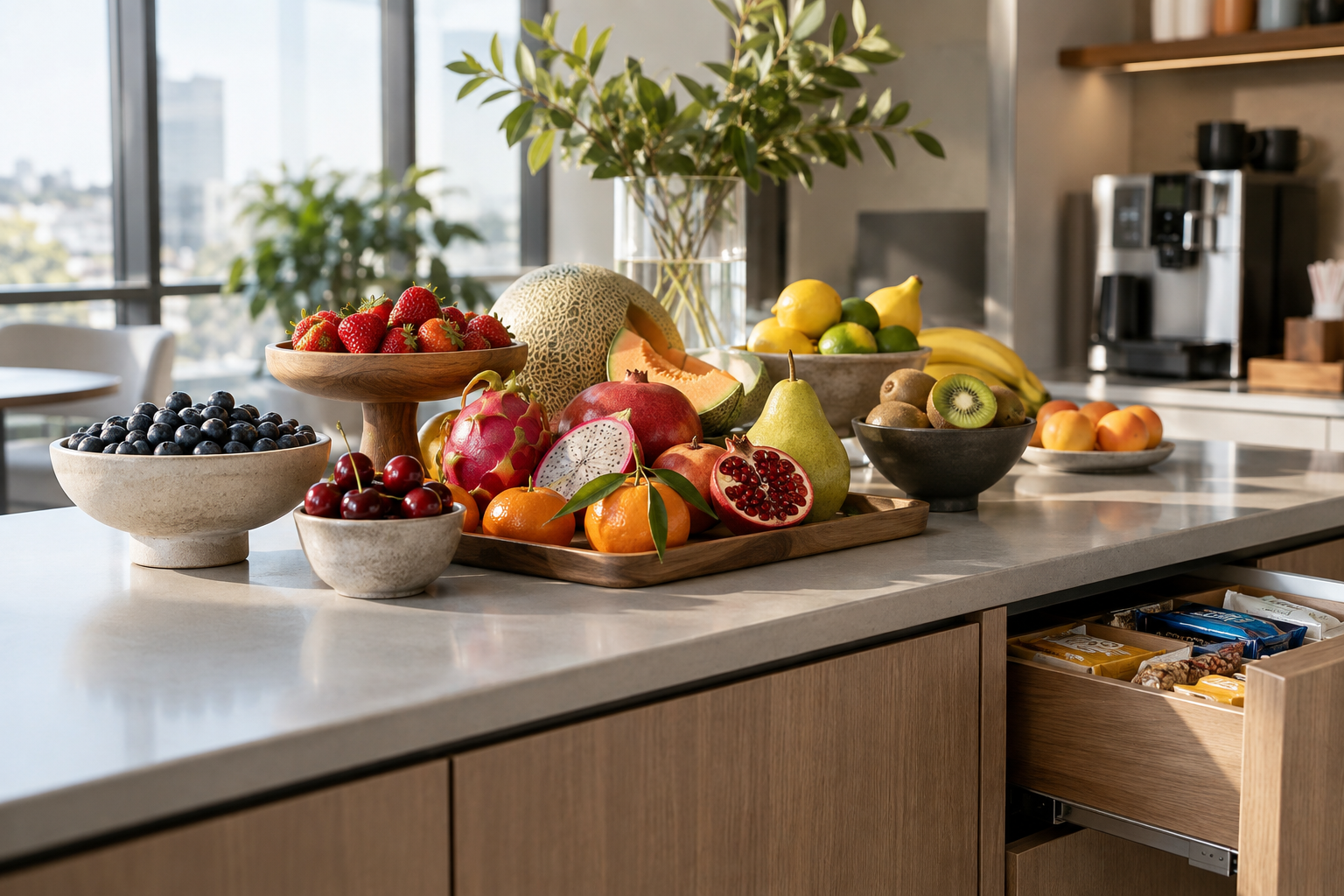
Workplace food decisions are often made quickly between meetings. Visibility and convenience therefore matter as much as intention. A bowl or tray of fresh fruit placed at the natural point of pause can make the fresher option easier to choose than an unopened drawer of packaged snacks.
That does not require removing every other option. A fruit-first approach simply changes the order in which choices are presented. It gives fresh produce a clear, maintained place in the everyday rhythm of the office rather than reserving it for an occasional wellness day.
- Use a visible, well-lit pantry position
- Keep fruit within easy reach
- Avoid overfilling the display
- Make replenishment responsibility clear
Build a practical assortment
The most useful office mix balances familiarity, seasonality and ease of handling. Fruits that can be picked up without preparation work well for busy teams. More delicate or cut produce requires a different serving and handling plan and should not be treated as interchangeable with whole fruit.
Preferences vary between workplaces, so the first assortment should be treated as a starting point. Record what moves quickly, what remains, and whether particular days or office areas behave differently. The next supply can then be discussed from observation rather than guesswork.
- Familiar whole fruits for everyday access
- Seasonal changes when appropriate
- Clear handling for delicate produce
- Approved alternatives when availability changes
Plan quantity without creating waste
Headcount is useful, but it is not a complete demand forecast. Attendance patterns, hybrid work, pantry location and meeting schedules all influence use. Begin with a reasonable requirement, then review what was actually taken and what remained in good condition.
A recurring programme works best when someone owns the feedback loop. The workplace contact can note broad preference and leftover patterns; the supplier can then review the requested quantity and assortment for the next cycle. This is operational learning, not a promise of a fixed consumption rate.
A smaller, consistently fresh display is usually more inviting than an oversized display left too long.
Make the programme part of the workplace
Fruit becomes a credible everyday benefit when the routine is dependable and uncomplicated. Employees should know where it is available, while facilities and pantry teams should know when it is expected and who receives it.
Keep communication factual. State the days, location and intended availability without making medical or productivity claims. Over time, a clear routine, a tidy display and responsive assortment reviews do more for participation than a large launch message.
- Named receiving contact
- Agreed pantry location
- Simple internal announcement
- Regular review of use and condition