

Define the employee need before selecting the fruit
A programme can respond to several different needs: access to a snack during a long shift, an easy option near a busy work area, a shared team break, or a convenient prepared serving for people with limited pantry facilities. Write down which need is being addressed. If every benefit is described as solving everything, the team will struggle to know whether it is working or which part to improve.
Talk to employees before choosing a format. A lunchtime counter may be convenient for a headquarters team but inaccessible to reception staff who cannot leave their post. A small office might prefer simple whole fruit over individually packed bowls. Ask about practical preferences rather than collecting diagnoses or detailed health histories. The resulting brief should describe the service people need, not assign a health label to the workforce or assume that everyone has the same routine.
Understand what the evidence supports
Research can explain why making fruit available is worth considering, but it should not become a promise about the company's results. In Backman and colleagues' worksite trial, fruit availability was associated with improved reported intake in the participating population. The appropriate starting point is food access and eating behaviour, not guaranteed savings or performance gains.
Separate that evidence statement from your own proposed service. An HR presentation could explain that the company is testing a convenient food benefit and will review uptake and employee feedback. It should not attach a fictional return-on-investment percentage to the plan. Include the source when referring to research and explain that it concerns a different workforce and intervention. This allows decision makers to understand both the rationale and the limits without needing a nutrition degree to interpret the proposal.
Map access across roles, floors and working patterns
Create an access map before ordering quantities. List the groups present during each service window: office employees, reception, security, housekeeping, contractors where included, and people on alternative shifts. Define who the benefit covers through the organisation's policy and approved budget. The supplier should receive that scope rather than being asked to decide employee eligibility at the delivery gate.
For each included group, note the collection point and realistic opportunity to use it. A benefit is not equally accessible simply because the same announcement went to everyone. If the order sits on one floor or is available only during a customer-facing team's busiest hour, access will differ. Consider separate release times or a second handover point if feasible. Check those arrangements with responsible workplace staff so the programme does not create an informal delivery task for a colleague who never agreed to it.
Make participation genuinely voluntary
Give people the freedom to enjoy the benefit, decline it or choose another suitable option. Avoid sign-up language that implies fruit consumption is a measure of motivation, discipline or loyalty. Some people will have personal food preferences, medical considerations or cultural practices they do not want to explain to their manager. A neutral service does not require public disclosure to accommodate ordinary non-participation.
Explain the collection arrangement and how staff can raise a practical requirement privately. Do not promise that every dietary adjustment can be supported before the supplier confirms capabilities. An exclusion request, such as leaving a fruit out of a planned mix, is different from assurance about allergen cross-contact. Use the fruit planner to document preferences, and have the actual service specification confirmed before communicating a guarantee to employees.
Offer useful choice without making the service complicated
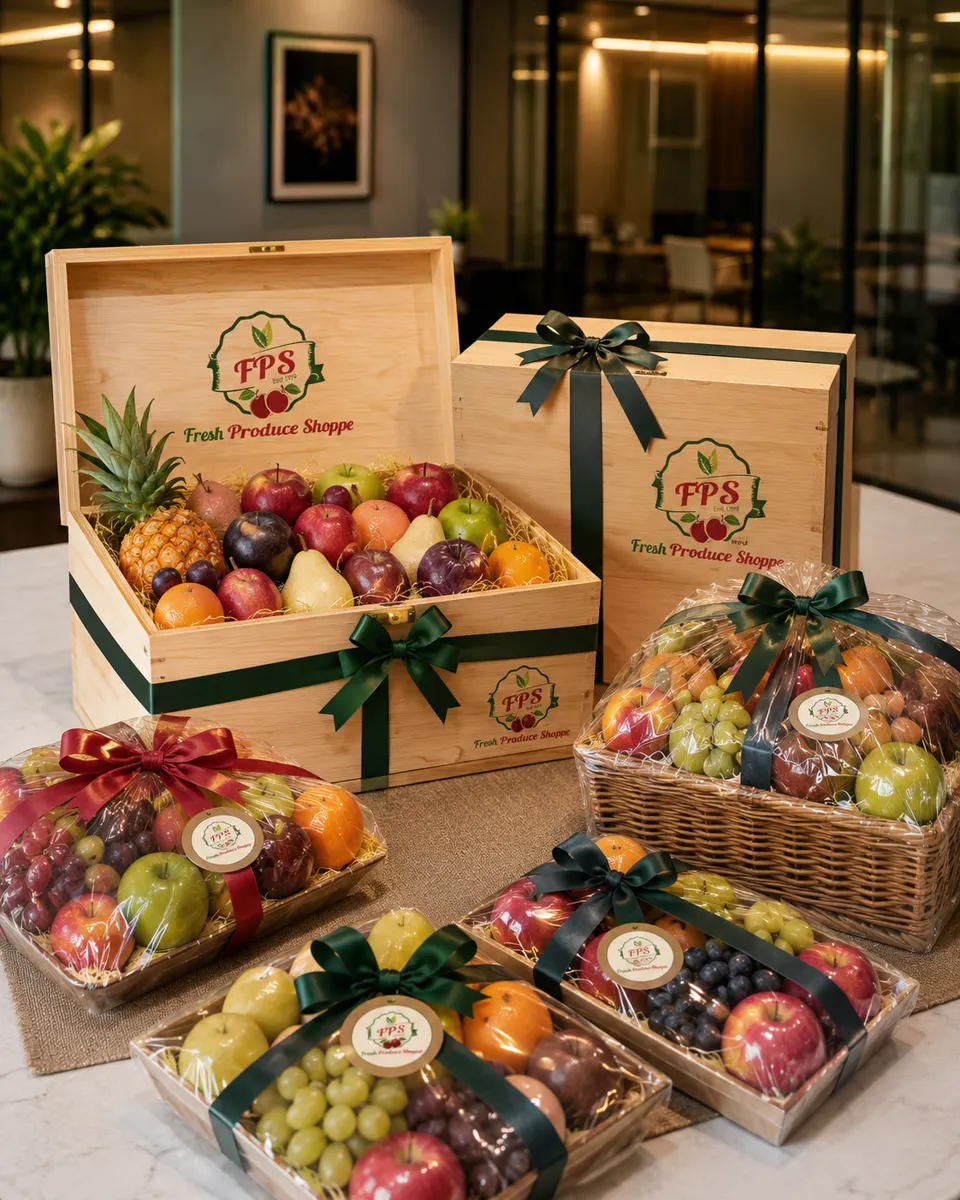
Choice should help staff participate, not turn one snack into a lengthy questionnaire. A small selection of familiar fruits may be enough for a pantry programme. A prepared fruit offer may need an ingredient list, a choice of format or a defined alternative process. Start with the minimum useful selection and review what people actually choose.
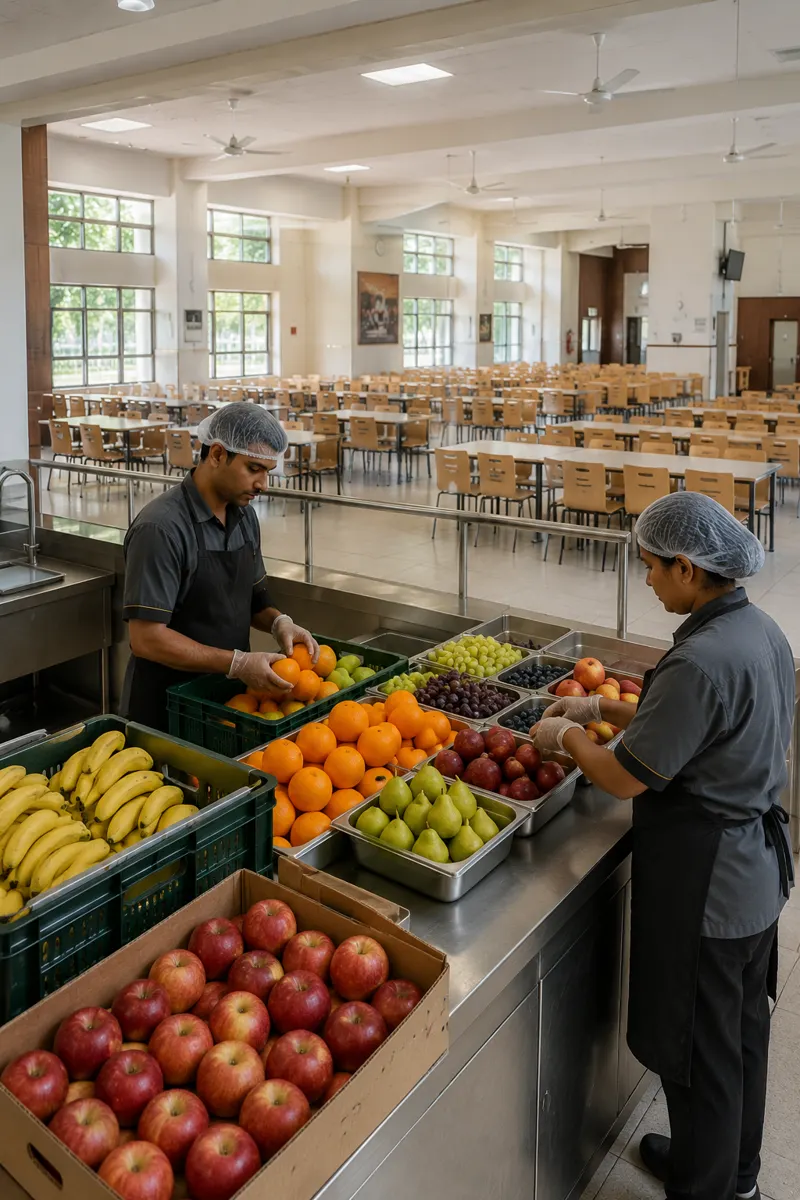
Consider the experience of picking up and eating the fruit. Does somebody need a knife, a plate, running water, a waste bin or refrigerated storage? Who provides these facilities? An individually packed serving can be convenient in one workplace and create unnecessary packaging in another. Let the service setting guide the choice. Maintain a clear distinction between employee preferences, the draft mix in a planner and confirmed availability for a specific date. The catalogue is a planning resource, not a live stock guarantee.
Keep the benefit alongside broader welfare responsibilities
A fruit programme can be a positive addition to the day, but it does not replace fair scheduling, appropriate rest, drinking water, manageable workloads or access to established employee support. The JAMA workplace wellness trial is a useful reminder that improvements in some reported behaviours do not automatically establish clinical or employment benefits. Its intervention was broader than supplying fruit.
For HR, the practical implication is to describe the programme proportionately. Say what is offered, who can use it and how it will be reviewed. Do not present fruit as compensation for problems employees have raised about work conditions. If feedback about the fruit break reveals that some staff cannot take an actual break, take that concern to the appropriate team. Adding more fruit will not resolve a scheduling issue by itself.
Write an inclusive launch message
A useful announcement names the start date, service location, approximate collection window, intended participants and contact for questions. Explain whether people need to register or can simply choose a serving. Keep ingredient information and handling instructions easy to find where required. Avoid phrases such as guilt-free or earn your snack, which can attach judgement to an ordinary food choice.
Choose accessible communication channels. A poster near the pantry will not reach everybody who works away from it. A long email may be missed by a shift team that uses another approved channel. Keep the message short enough to act on and make the practical details consistent across channels. If the assortment changes, update the label and announcement rather than relying on staff to discover an ingredient after opening the pack. Communication is part of service delivery, not just a launch activity.
Protect privacy in feedback and evaluation
Most programmes need operational and preference information, not sensitive health data. An anonymous or aggregated survey can ask whether the collection time is convenient, whether the choice is useful and what should change. Do not ask a manager to maintain a list of people who decline fruit or use participation as an informal health assessment.
If the organisation wants to evaluate medical outcomes, that requires a separate, appropriately governed approach with qualified professionals and suitable consent and privacy safeguards. Keep that work outside a routine supplier enquiry. The FPS planner should receive service details and fruit preferences. It does not need employee diagnoses, medical records or individual health scores to help the buyer request an office fruit proposal.
Budget for equitable access
Start the budget with the approved scope and the expected attendance per service. Include delivery, the chosen fruit format, any preparation or packing included in the proposal, workplace distribution and the facilities needed to support it. A price per kilogram alone may not represent the cost of an accessible benefit.
Consider an illustrative site with two working shifts. If the day team receives 80 allocations and the evening team has 30 eligible participants, planning only around the first 80 leaves a gap in the intended welfare offer. Confirm whether a second service is feasible and what it costs before the launch. These figures are examples, not FPS rates or customer results. Use the supplier's written response to decide what the organisation can reliably sustain rather than promising an arrangement that is not funded.
Review fairness and usefulness after the pilot
Set a review date before the first delivery. Ask whether the different eligible groups were able to access the service and whether it fitted their routine. Compare collection opportunities rather than interpreting a lower collection count as a lack of interest. When a group misses the window, first understand the operational reason.
Record useful changes and unresolved issues. A review might result in a different delivery window, an additional collection point, smaller quantities or a revised fruit mix. That is a constructive outcome even if the original plan changes substantially. Keep findings descriptive: employees said, the team observed, the service record shows. Avoid turning a short preference survey into a claim that the programme improved morale, reduced sickness or strengthened retention across the workforce.
Questions HR teams commonly ask
Is office fruit an employee welfare benefit? It can be offered as one practical part of a wider welfare programme. Its value depends on reliable delivery, convenient access, useful choice and respectful participation. The company should assess whether employees find that actual offer helpful rather than assume that the label wellbeing proves a benefit.
How can we include hybrid staff fairly? Clarify the scope of the programme and consider the days on which people are expected on site. Consistency may mean a dependable benefit when they attend, rather than identical daily quantities. Communicate the arrangement clearly and review it through the organisation's policy.
Should we measure health improvements? For a routine fruit programme, start with service and experience measures. Medical evaluation is separate work requiring appropriate expertise and governance. The measurement guide sets out a practical boundary between collection data, feedback and health claims.
Can staff request a different fruit? Yes, preferences can be included in an enquiry. Availability, substitutions, preparation and dietary requirements still need confirmation. Use the office fruit planner to build a draft mix, then review the supplier's response before telling employees that a particular option is guaranteed.
Turn the welfare objective into a proposal brief
Finish with a short statement of purpose, such as providing a convenient voluntary snack during an agreed employee break. Add the covered groups, expected participants by day, service locations, format, receiving role, facilities and date for a pilot review. Include the practical communication plan so the supplier understands how the fruit will actually reach people after handover.
Send the brief through the office fruit service enquiry or build it inside the fruit planner. Fresh Produce Shoppe can review the requirement and discuss availability and supply arrangements for Delhi NCR workplaces. A proposal should confirm the actual scope and commercial details. It is an operational response to an employer's requirements; it should not be interpreted as medical advice or a guarantee of employee health, satisfaction or retention. A well-designed benefit is a service people can understand and use.
Example: one benefit, three different access needs
Imagine a business with a main office floor, a reception team and a small evening operations group. The first proposal offers fruit at one pantry counter during a single afternoon window. The total quantity looks sufficient, but the reception team cannot leave while visitors are arriving and evening employees start after distribution finishes. The issue is not fruit quality or individual motivation. The access arrangement does not fit the covered groups.
A more useful pilot keeps a modest assortment and defines separate collection opportunities. Reception receives an agreed handover during a quieter period, while the evening group has a confirmed arrangement suited to its facilities and timing. A responsible person checks each handover. Prepared servings are not simply held unrefrigerated until the next shift; any alternative needs the supplier's handling instructions and workplace approval. The organisation decides the inclusion policy and budget before promising the revised service.
At review, the HR team compares whether each group could use its allocated opportunity. It gathers short, voluntary comments about convenience and preferences, with no requirement to report medical information. The result may be a simpler whole-fruit option for one group and prepared servings for another. Fairness can mean an appropriately accessible service, rather than the same box at exactly the same time. This is an illustrative planning scenario, not a customer testimonial or proof that a particular welfare result will occur.
Review fairness with the people using the service
Before expanding the programme, ask a colleague from each intended service group to walk through the collection process. A daytime manager may not notice that a later team cannot enter the pantry, that a sign is difficult to read or that a counter creates an awkward queue. Record the issue and assign a practical action rather than describing the service as inclusive simply because it is open in principle.
An illustrative review could identify a second collection point and a clearer message for new starters. Those changes do not require a claim about improved health; they improve access to the benefit being offered. Keep the review proportionate and avoid asking employees to share personal information to justify an ordinary request. After making a change, check whether the people affected can actually use the new arrangement. A documented decision followed by a short check is more useful than another broad announcement about wellbeing.