

Start with the actual afternoon routine
Map what happens between lunch and the end of the working day. Some teams have a predictable break; others serve customers continuously or move between meetings. Ask when a voluntary snack can realistically be collected and eaten. A delivery arriving at a convenient time for the building is not automatically ready at a convenient time for employees.
Look at the facilities around that moment. A person leaving a meeting may appreciate a familiar whole fruit they can carry easily. A team sharing a break area may prefer a prepared assortment. An employee returning to a reception desk may need a format that can be eaten neatly during an approved break. Start with those situations rather than an assumption that everybody needs an identical bowl at three o'clock. If no workable break exists, resolve scheduling with the responsible workplace team first.
Keep a snack in the context of the whole diet
Fruit can be one component of a broader eating pattern. The NHLBI DASH eating plan combines fruits with vegetables, whole grains and other food groups. It is an overall dietary approach, not evidence that an office snack by itself has the effects of the complete plan.
For a workplace programme, that means fruit should be offered alongside a sensible wider food environment. Do not position it as a replacement for lunch or assume that every person's afternoon hunger has the same cause. A fruit serving may suit somebody who wants a light snack, while another employee may need a more substantial meal. Keep the programme flexible and avoid making the supplier responsible for personalised nutrition decisions that it is not qualified to make.
Separate tiredness from a fruit marketing claim
The phrase afternoon slump is familiar, but feeling tired can have many explanations. Work patterns, sleep, meal timing, illness and other individual factors can all be relevant. A fruit menu should not diagnose the cause or promise instant concentration. Use an operational aim such as making a fresh snack easy to access during an agreed break.
Ask employees what would make that break useful: a quieter place to sit, dependable water access, less queueing or a snack that is easy to carry. Those questions lead to service improvements without implying a medical effect. If someone experiences persistent or concerning fatigue, an appropriate health professional can assess it. A workplace fruit campaign should never tell them that purchasing a particular mixture replaces that assessment or guarantees more productive afternoons.
Choose a small set of familiar whole fruits
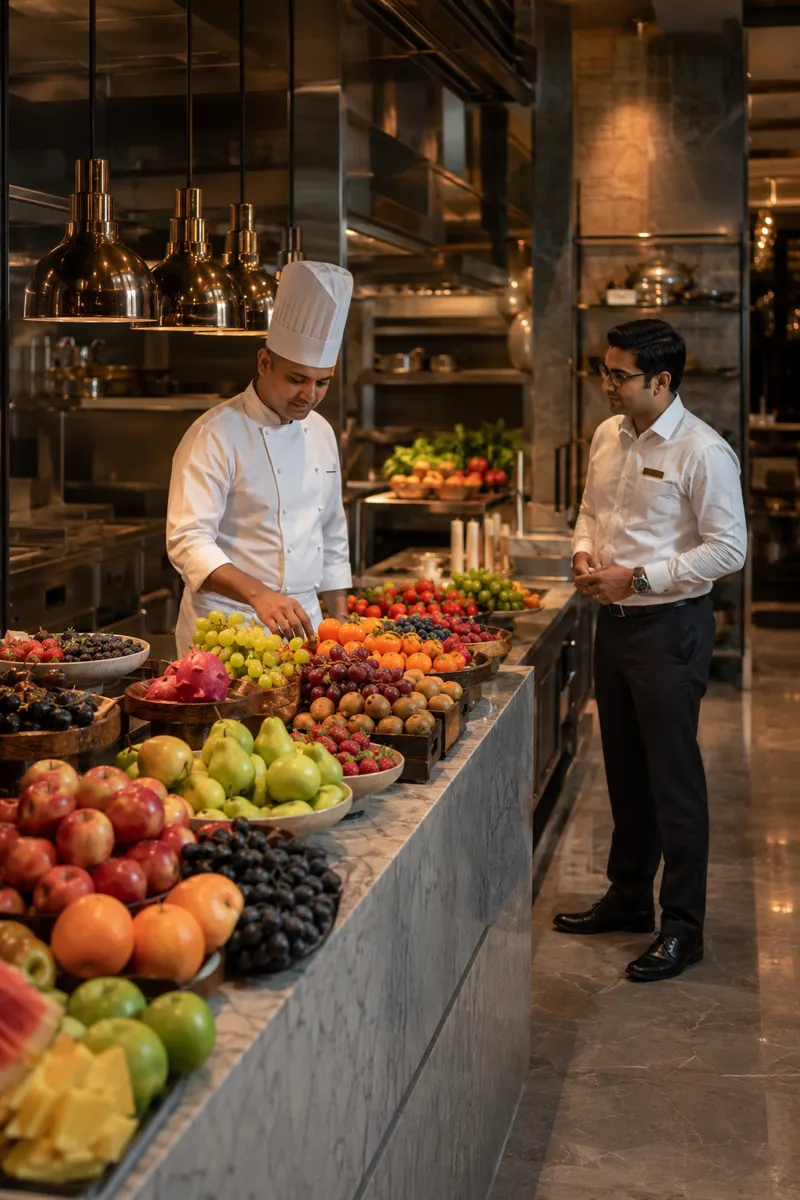
A whole-fruit starter menu might include apples, bananas and oranges, subject to availability and preferences. The practical difference between them matters as much as their appearance. Some need peeling, some leave a core and some can be carried conveniently. Provide the relevant washing arrangements and suitable bins. Confirm the actual specification rather than assuming that fruit name alone defines a serving.
Ask about size and ripeness if these affect use. A buyer planning one piece per employee needs an agreed range, not an unspecified crate weight. Staff preferences may also change over time. Keep an option to propose seasonal alternatives rather than buying a large quantity of a fruit people rarely choose. The fruit planner lets the buyer experiment with a mix before the supplier confirms the assortment and service terms.
Use prepared bowls where facilities support them
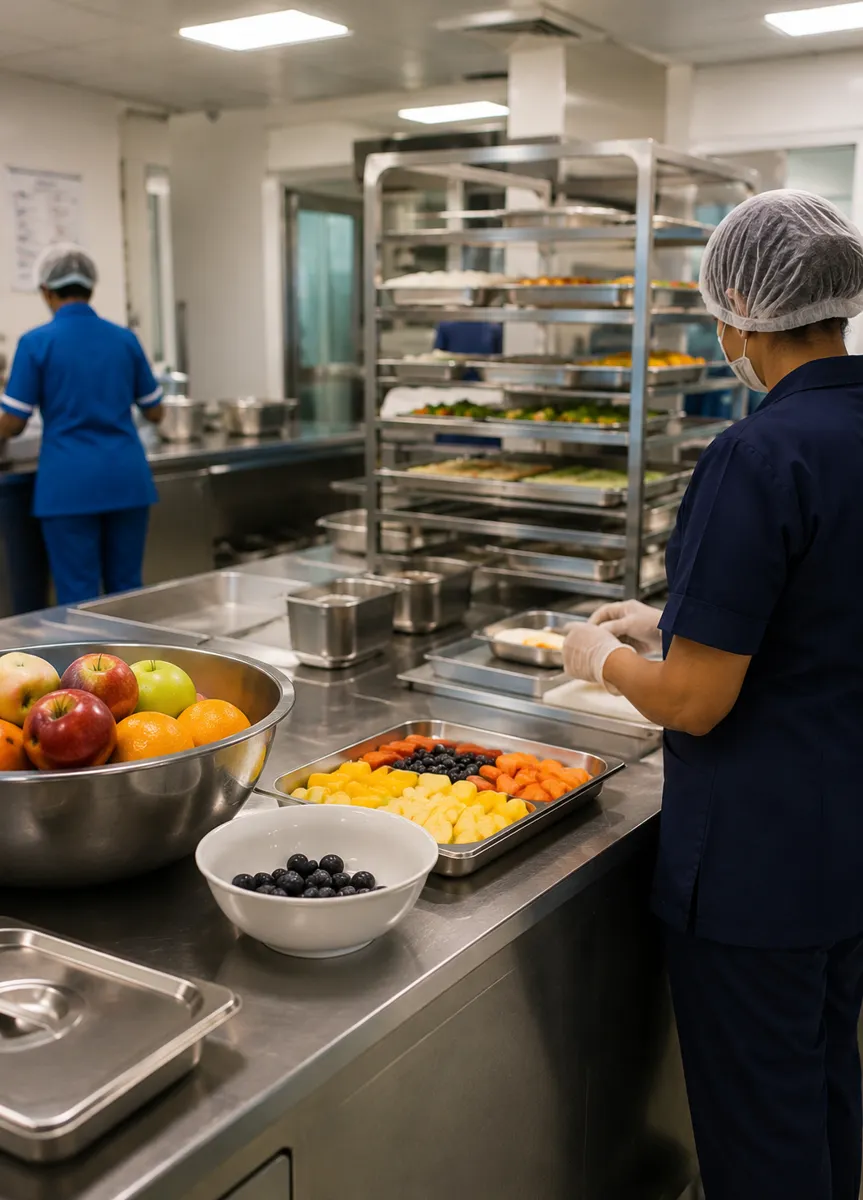
Prepared portions can reduce the preparation employees need to do, but they create handling responsibilities for the office. Check the receiving route, suitable refrigeration, planned serving window, utensils and waste arrangements before selecting a bowl simply because it looks convenient. Packing in an individual container does not remove the need to follow supplied storage and use instructions.
A papaya, pineapple and pomegranate combination is a planning example for an afternoon bowl, not a guaranteed daily assortment. Ask the supplier which fruits are practical for the service, what prepared portion is proposed and what instructions apply. Review the whole-fruit versus prepared-bowl guide if the organisation is comparing formats. Availability and preparation capabilities need confirmation before the workplace announces a particular menu to employees.
Think carefully about paired snack options
Some workplaces also provide plain yoghurt, nuts, seeds or another food alongside fruit. That creates a wider food offer rather than a fruit-only order. The organisation should decide who sources each component, how ingredients are identified, what handling applies and whether facilities can support the combined service.
Do not describe an optional pairing as suitable for everybody. Nuts, dairy products and other foods can introduce allergy or dietary considerations. A separate fruit bowl does not prove an allergen-free preparation process. Keep products and ingredient information clear, avoid mixing items casually at the counter and confirm any required controls with competent food-service staff. A simple fruit offer can be a better first pilot than an expanded menu that nobody has agreed to manage.
Let whole fruit and juice remain different choices
A fruit snack and a juice drink are not interchangeable formats. WHO's healthy diet guidance treats sugars in fruit juice as free sugars. That is a useful reason to avoid assuming that a sweet drink provides the same eating experience as whole fruit.
For office planning, ask what need the product serves. Someone wanting an easy drink during a short interval has a different practical requirement from someone choosing a snack. Keep ordinary drinking water available and describe products accurately. A beverage made with fruit should not be labelled a fruit bowl merely because the flavour names match. The whole fruit and juice comparison explains the procurement and communication differences in more detail without treating either product as a universal answer.
Build combinations around convenience and preference
A useful combination can be described through familiar selection and workplace format. Apples and citrus can be proposed for a whole-fruit pantry; melon and another suitable prepared fruit may be discussed for a staffed break; a single preferred fruit may suit a small group better than a complex mixture. These are service ideas, not medical pairings or claims about how two fruits interact inside the body.
Avoid rules suggesting fruit combinations detoxify the body, burn fat or must be eaten only at a particular hour. Morning and afternoon labels in the planner organise service occasions. They do not imply that a fruit becomes healthy or unhealthy when the clock changes. Ask about excluded fruits, ingredient information and actual handling constraints, then adjust the proposed menu to fit a real workplace rather than a fashionable combination name.
Set the serving quantity with clear units
A piece, a prepared portion and a kilogram are different buying units. If 40 people are expected and the office plans one individual allocation each, that starts a requirement for 40 servings. The confirmed format determines how the supplier converts that into fruit quantities. Do not infer that 40 people require 40 kilograms or a fixed number of each fruit without an agreed specification.
For an illustrative prepared service of 40 portions at 150 grams each, the required prepared fruit is six kilograms. This is a planning calculation, not a recommendation that every adult should eat 150 grams at the break. Fruit bought before trimming would require a separate yield calculation. Ask the supplier to confirm the basis used in the quotation so the buyer can compare like with like and avoid confusing purchased weight with usable prepared servings.
Position the snack where people can use it
The counter or collection location should be visible, accessible and outside routes that create congestion. Avoid placing a food service where staff must block a lift lobby, reach over equipment or queue through a meeting room doorway. Confirm any building restrictions and ensure that the arrangement does not interfere with safety or normal operations.
Supply concise signs that explain the assortment and collection process. Do not display a broad claim such as suitable for all diets when that has not been established. If the service is intended for a specific team or meeting, make the scope clear. Where attendance is staggered, a responsible person may need to manage distribution over an agreed window. That is an operating role requiring time and ownership, not an automatic task covered by the fruit delivery itself.
Plan for hygiene and suitable storage
The FDA's produce guidance recommends refrigerating purchased pre-cut produce and washing produce under running water. It also cautions against using soap on fruit. These are general references; the workplace must follow the instructions relevant to its actual order and applicable procedures.
Make practical responsibility explicit. Who receives the order, checks it against the confirmation and moves it to suitable storage? Who releases prepared servings for the break? Who knows what to do if the meeting is delayed? Avoid leaving those questions to whichever employee happens to walk through reception. The office cut-fruit receiving checklist can help the buyer identify those steps before the first afternoon service.
Reduce leftovers by investigating the reason
Unused fruit can reflect excessive quantities, a poorly timed break, inconvenient collection or a disliked variety. Record the count with a short explanation. A higher leftover count on a day with many off-site meetings means something different from the same count when attendance was normal and staff complained about the format.
Keep usable leftovers and unsafe-to-serve food distinct. Follow supplied handling instructions rather than retaining prepared fruit indefinitely to avoid reporting waste. Use the pilot to adjust attendance assumptions, delivery frequency and mix. Ask whether an alternative such as fewer deliveries or whole-fruit choice would serve the group better. The aim is a dependable service that people value, not a photograph of a constantly full counter or zero recorded waste achieved by poor handling.
Review the experience without promising productivity
A short review can ask whether the snack was easy to access, whether the fruit mix was appealing and whether the portion format suited the break. Optional feedback may reveal that a simpler assortment works better. Separate those preferences from complaints about an order that did not meet its confirmation. Each requires a different response.
Do not describe positive feedback as proof of improved concentration or reduced absence. A staff member saying that they enjoyed the afternoon break is reporting an experience, not a controlled performance measurement. Keep the programme's benefit grounded in what the organisation can observe and maintain. If HR wants a wider employee welfare programme, review the inclusive welfare guide so the snack fits broader access, communication and participation arrangements.
Questions before you start
What is a sensible first menu? Start with a modest choice that staff recognise and facilities can support. Whole-fruit options can be discussed where suitable, while prepared bowls need a confirmed handling and receiving plan. The best first menu answers the workplace's actual constraints.
Should we serve fruit at an exact time? Choose a service time that employees can use and that fits the product's handling instructions. A time label is an administrative choice, not a rule prescribing when every person should eat a particular fruit.
How do we order for meetings and ordinary desk use? Give those occasions separate expected counts and formats. An event platter, a shared pantry and individually packed servings may require different preparation, utensils and handover arrangements. Confirm them separately rather than blending the quantities into one unexplained total.
What should the enquiry include? Build an example mix in the fruit planner, add the expected people, days and format, then request a proposal. Include the office address, receiving details, storage facilities and exclusions. The FPS team can review availability and supply arrangements before an actual service is confirmed.
Make the first week a learning exercise
For the first week, keep the menu and service process easy to understand. Tell employees where the fruit will be available and who can answer practical questions. Give the receiving team the confirmed order and identify a backup organiser. Avoid adding a new selection every day before the workplace has learned whether the original format works. Familiarity can help reveal whether a problem concerns the fruit itself or the way it is being served.
At the end of the week, compare the intended service with what happened. Note a missed meeting, an unavailable collection area or an unexpected attendance change. Ask for a small number of ordinary preference comments. Use those observations to prepare the next order, keeping accepted elements while changing one practical difficulty at a time. This is an operational review rather than a clinical experiment. It can still produce a useful improvement: a snack option that fits the break, reaches the intended employees and can be managed consistently by the office team.
Keep the final snack brief available to the person covering the office role. A clear record of the preferred mix, confirmed format and service days prevents a temporary handover from becoming another unplanned menu change. Review the brief when attendance or facilities change rather than assuming the first arrangement remains suitable indefinitely.